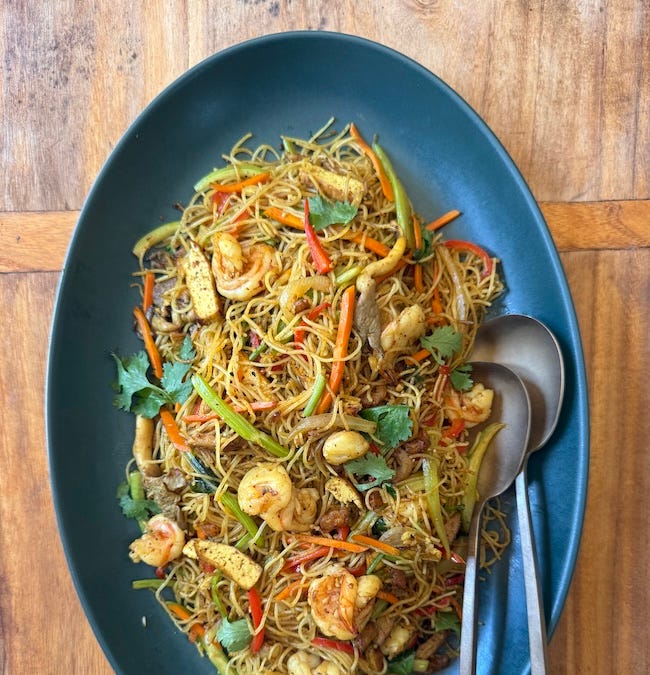
The culinary world is full of delightful surprises and fascinating origin stories, and few dishes encapsulate this better than Singapore Noodles. Often found gracing the menus of Chinese takeaways and restaurants across the globe, this vibrant, curry-infused vermicelli stir-fry has captivated taste buds with its unique blend of flavors and textures. Yet, beneath its seemingly straightforward name lies a delicious deception – a tale of international influence, Cantonese innovation, and a geographical misnomer that adds an intriguing twist to its already flavorful narrative.
Despite its evocative name, Singapore noodles, or Xing Zhou Chao Mi (星洲炒米), has no authentic roots in the bustling city-state of Singapore. Indeed, ask a Singaporean about this dish, and you might be met with confusion or even a polite chuckle. This iconic dish, with its signature yellow hue and aromatic spice, is, in fact, a celebrated creation of Hong Kong's resourceful Cantonese chefs. Its journey from the bustling streets of post-war Hong Kong to becoming a global takeaway staple is a testament to culinary adaptability and the power of a captivating name.
The Curious Case of Singapore Noodles: A Name Misnomer
One of the most surprising facts about Singapore noodles is that they are entirely unrelated to Singaporean cuisine. This revelation often comes as a shock to diners who assume a direct link between the dish and its namesake. The phenomenon of a dish being named after a place it doesn't originate from is not unique; consider the Swiss wing, which has no connection to Switzerland, or the British Coronation Chicken, created in 1953 for Queen Elizabeth II's coronation, a prime example of culinary fusion with a specific historical context.
The true birthplace of this beloved stir-fry is Hong Kong. Developed by ingenious Cantonese chefs, the dish emerged from a desire to experiment with new ingredients and create exciting, affordable meals. The inspiration came from an unexpected source: the British colonial presence, which introduced curry powder to Hong Kong. This blend of aromatic spices, already a staple in British culinary circles through their extensive colonial empire, provided the perfect canvas for Cantonese stir-fry techniques, marrying East with West in a distinctly delicious way.
The name "Singapore" was likely chosen for its exotic appeal during the 1950s and 60s. At that time, Singapore was gaining a reputation as a cosmopolitan hub known for its vibrant street food and spicy flavors. Associating the new curry-infused noodle dish with Singapore lent it an air of adventure and sophistication, making it more alluring to diners, even if the connection was purely nominal. It was a marketing stroke of genius that helped this Cantonese innovation capture the imagination, and appetites, of the public.
A Post-War Culinary Innovation in Hong Kong
The true story of Singapore noodles begins in the dynamic, rapidly developing environment of post-World War II Hong Kong. As a bustling trading port, Hong Kong experienced an economic boom, attracting a diverse population of laborers and entrepreneurs. This era demanded quick, nourishing, and flavorful meals that could be prepared efficiently and sold affordably.
It was in this fertile ground that Cantonese chefs, renowned for their mastery of stir-frying techniques and their ability to elevate simple ingredients, began to experiment. The arrival of curry powder, a legacy of British colonial trade routes, presented an exciting new flavor profile. Rather than simply adopting existing curry dishes, these chefs brilliantly integrated the spice into their traditional cooking methods. They sought to create something that resonated with local tastes while offering a touch of international flair.
The result was the development of Singapore-style noodles: a hearty, satisfying dish featuring thin rice vermicelli, stir-fried with an array of proteins like char siu pork, succulent shrimp, and tender chicken, alongside fresh vegetables such as bell peppers, onions, and carrots, all brought together by the distinctive aroma and mild heat of curry powder. Scrambled eggs and a scattering of scallions often provided the finishing touches, adding both texture and visual appeal.
This dish was more than just a meal; it was a symbol of Hong Kong's adaptability and culinary ingenuity. It showcased how global ingredients could be seamlessly woven into local traditions, creating something entirely new and incredibly popular. For a deeper dive into the specific origins and evolution of this dish, consider reading Unraveling Singapore Noodles: A Cantonese Hong Kong Creation.
What Makes Singapore Noodles So Distinctive?
Beyond its intriguing origin story, the enduring appeal of Singapore noodles lies in its unique combination of ingredients and cooking techniques. The foundation of the dish is the thin rice vermicelli, also known as mei fun. These delicate noodles are stir-fried to achieve a light, chewy texture that readily absorbs the complex flavors of the dish while maintaining a pleasing springiness.
The star ingredient, however, is undoubtedly the curry powder. It's not an aggressive, fiery spice blend but rather a mild, aromatic one that imparts a beautiful golden-yellow hue to the noodles and a subtle warmth to every bite. This isn't the heavy, sauce-laden curry often associated with South Asian cuisine, but a drier, more fragrant application that harmonizes with the other components.
- Key Proteins: Traditionally, a mix of char siu (Cantonese BBQ pork), shrimp, and chicken is used, offering a varied textural and flavor experience. The smoky sweetness of char siu, the brininess of shrimp, and the lean savoriness of chicken create a balanced profile.
- Vibrant Vegetables: Bell peppers, onions, carrots, and bean sprouts add freshness, crunch, and essential vitamins. These vegetables contribute to the dish's colorful appearance and provide a pleasant counterpoint to the richness of the proteins and the spice of the curry.
- Scrambled Eggs & Scallions: Often added at the end, scrambled eggs provide a fluffy, savory element, while freshly chopped scallions lend a burst of oniony freshness and a vibrant green garnish.
- Stir-Fry Technique: The quick, high-heat stir-fry method is crucial. It ensures that the ingredients cook evenly, the noodles maintain their texture, and the flavors meld together perfectly without becoming soggy. Ingredients like ginger and garlic form the aromatic base, typical of Cantonese stir-frying.
Tips for Appreciating and Preparing Singapore Noodles
To truly appreciate Singapore noodles, pay attention to the balance of flavors—the savory, the sweet (from char siu), the umami (from soy sauce and other seasonings), and the gentle spice of the curry. The vermicelli should be separate and lightly coated, not clumped together.
If you're making them at home, quality ingredients are key. Don't skimp on fresh vegetables and consider making your own char siu for an authentic touch. Pre-soaking the vermicelli adequately is crucial to prevent them from becoming mushy or brittle during the stir-fry. A wok or a large, high-sided skillet is ideal for achieving the perfect stir-fry, allowing for quick, even cooking.
For those eager to try their hand at crafting this iconic dish, exploring techniques and ingredient specifics can make all the difference. Check out Mastering Singapore Noodles: The Iconic Curry Vermicelli Stir-Fry for practical advice and recipes.
From Hong Kong Takeaways to Global Phenomenon
The global ascent of Singapore noodles truly took off in the 1980s. As Cantonese immigrants spread across the globe, establishing Chinese restaurants and takeaways in the United States, United Kingdom, Australia, and beyond, they brought their culinary traditions with them. Singapore noodles, with its appealing taste and distinctive character, quickly became a staple on menus in these new lands.
It was embraced as a prime example of "fusion Chinese cuisine"—a dish that felt both familiar (noodles, stir-fry) and exotic (curry powder) to Western palates. Its adaptability also contributed to its widespread appeal; variations incorporating different types of seafood for a "surf-and-turf" element, or vegetarian versions using tofu and mushrooms, proved that the core concept could evolve to suit diverse preferences and dietary needs.
Today, Singapore noodles symbolizes the adaptability and enduring legacy of diasporic Chinese cooking. It's a dish that transcends its geographical misattribution, standing as a testament to the creativity of chefs who, with limited resources, transformed cultural influences into culinary gold. While Singaporeans may still express bemusement or occasional irritation at the dish's misnomer, its global popularity remains undiminished, securing its place as a beloved international dish.
Conclusion
The surprising story of Singapore noodles is a rich tapestry woven with threads of history, cultural exchange, and culinary ingenuity. From its unexpected origins in post-war Hong Kong, born out of Cantonese chefs' experimentation with British-introduced curry powder, to its rise as a global takeaway favorite, this dish offers much more than just a flavorful meal.
It's a vibrant reminder that food often tells a complex story of migration, adaptation, and the creative spirit of human beings. So, the next time you savor a plate of these delightful curry vermicelli, remember that you're not just enjoying a tasty stir-fry, but a piece of culinary history—a truly global dish, albeit one with a delightfully misleading name, that continues to bring joy to tables worldwide.
